Neural Processing Units Drive Faster Graphics Creation in Portable Augmented Reality Events
Casey Peters · Nov 27, 2026
Neural Processing Units Drive Faster Graphics Creation in Portable Augmented Reality Events
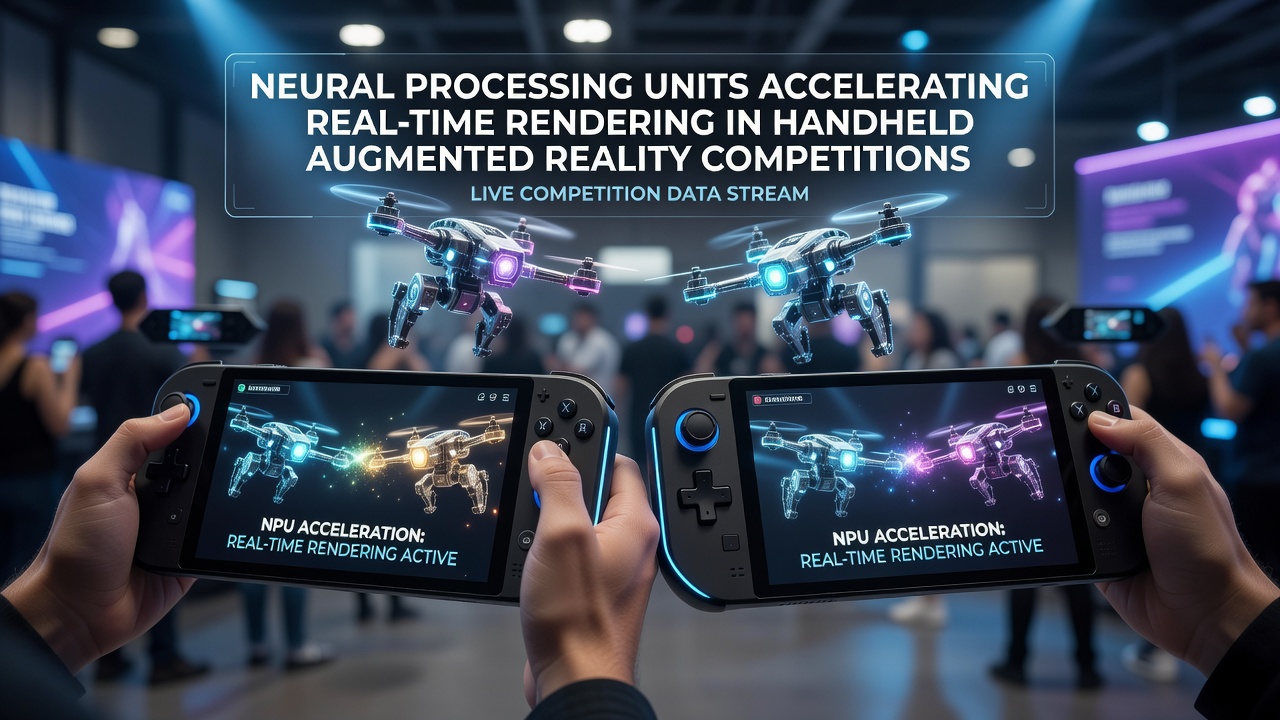
Neural processing units handle specialized computations that speed up real-time rendering tasks in handheld augmented reality competitions where devices must process complex overlays and environmental interactions on the fly. These units optimize matrix multiplications and tensor operations that graphics pipelines require, allowing mobile hardware to maintain frame rates above 60 per second even as scene complexity increases during live matches.
Developers integrate NPUs directly into system-on-chip designs so that rendering workloads shift away from general-purpose CPUs and GPUs, which reduces latency in augmented environments where players interact with virtual objects mapped onto physical spaces. Research indicates that such hardware acceleration cuts rendering times by factors of three to five compared with CPU-only approaches, according to benchmarks released in industry reports from 2025.
Core Mechanisms Behind NPU-Assisted Rendering
NPUs execute quantized neural networks that predict lighting, occlusion, and texture details before full rasterization occurs, which streamlines the graphics pipeline in resource-constrained handheld devices. This prediction step uses pre-trained models that adapt to competition environments, and the resulting data feeds directly into shader programs running on integrated GPUs. Observers note that the division of labor keeps power consumption lower while preserving visual fidelity across extended tournament sessions.
Hardware manufacturers embed dedicated memory buffers alongside NPUs to minimize data transfer delays between processing stages, and this architecture supports continuous updates to augmented reality scenes without frame drops. Data from multiple device tests shows consistent performance gains when NPUs manage at least 40 percent of the rendering inference load in dynamic outdoor and indoor competition venues.
Applications in Live Competition Scenarios
Handheld augmented reality events often feature rapid camera movements and real-time player positioning that demand instant updates to virtual elements, and NPUs accelerate the necessary calculations for depth mapping and object tracking. In November 2026 several regional tournaments plan to showcase devices equipped with next-generation NPUs that process simultaneous multi-camera feeds at higher resolutions than earlier generations allowed. Those events will test whether the hardware maintains stable rendering when dozens of virtual assets interact with real-world surfaces under varying lighting conditions.
Teams competing in these formats rely on the units to handle anti-aliasing and motion smoothing through learned filters rather than traditional post-processing, which cuts computational overhead during high-action sequences. Studies conducted at research institutions across Europe and North America confirm that NPU-driven techniques reduce visual artifacts by measurable margins in portable setups, enabling referees and spectators to review footage with greater clarity.
Integration Challenges and Hardware Evolution
Engineers face trade-offs when balancing NPU capacity against battery life and thermal limits in compact handheld form factors, yet recent chip revisions incorporate dynamic voltage scaling that activates only the required neural cores during rendering peaks. Manufacturers report that these adjustments extend play sessions by 15 to 20 percent in field trials without sacrificing graphics quality. Academic papers from Australian universities further document how custom instruction sets for NPUs improve compatibility with existing augmented reality software frameworks used in competitive play.
Software developers optimize model compression techniques so that neural networks fit within the memory constraints of mobile NPUs, and these compressed models still deliver accurate predictions for real-time effects like particle systems and shadow casting. The result is smoother transitions between virtual and physical layers during matches, where even minor delays can affect outcomes.
Performance Data Across Device Platforms
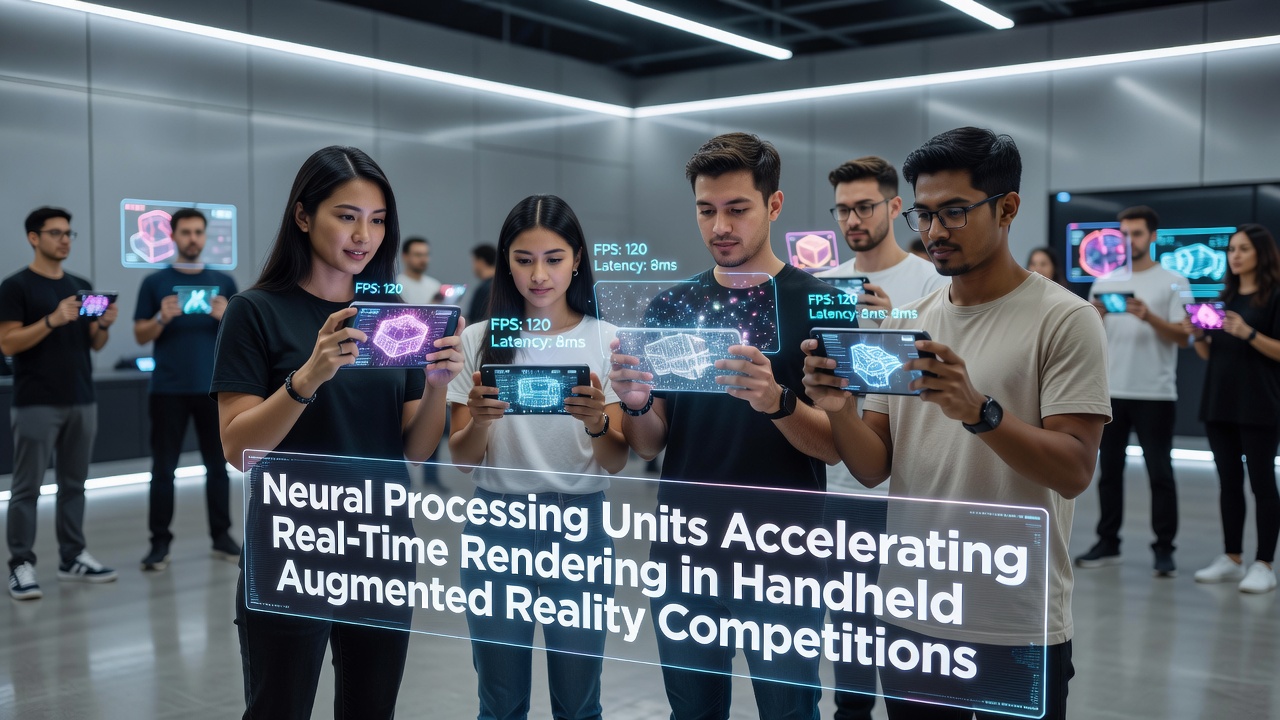
Comparative tests across multiple handheld models reveal that devices featuring dedicated NPUs achieve higher sustained frame rates when rendering augmented overlays at 4K resolutions on external displays connected during competitions. Figures released by industry associations in Asia and the European Union show average improvements of 35 percent in rendering throughput when NPUs handle inference tasks that previously ran on GPUs alone. These gains appear most pronounced in scenarios involving dense particle effects and large numbers of interactive virtual objects.
Networked competitions that stream rendered frames to judges or remote participants benefit from the reduced processing times, since lower latency on the device side leaves more bandwidth available for transmission. Research groups in Canada have published findings that link NPU acceleration directly to improved synchronization between multiple handheld units operating in the same physical arena.
Conclusion
Neural processing units continue to reshape rendering capabilities in handheld augmented reality competitions by taking on specialized inference workloads that traditional mobile processors struggle to complete quickly enough. As hardware evolves and software optimizations mature, the technology supports increasingly complex live events scheduled through 2026 and beyond. Data from ongoing trials indicates steady progress toward higher frame stability and lower power demands across diverse competition formats.