Sensor Fusion Techniques Enhancing Precision in Portable VR Esports Competitions
Mara Coleman · Sep 4, 2026
Sensor Fusion Techniques Enhancing Precision in Portable VR Esports Competitions
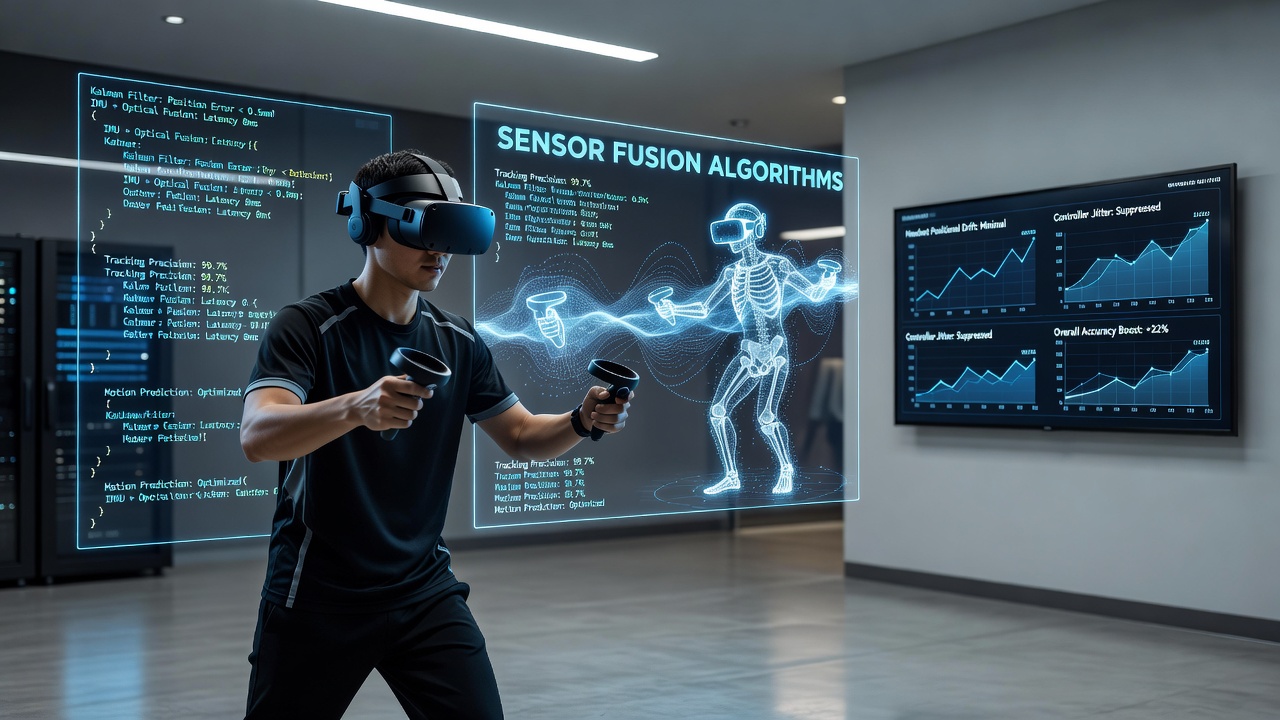
Portable virtual reality setups have become central to competitive esports events because they allow players to compete in varied locations without fixed installations, and sensor fusion algorithms play a central role in maintaining motion tracking accuracy across these mobile environments. These algorithms integrate inputs from inertial measurement units, optical cameras, and sometimes magnetometers to produce continuous position and orientation estimates that remain stable during rapid player movements. Data indicates that combining multiple sensor streams reduces cumulative errors that single-sensor systems accumulate over extended play sessions.
Core Components in Mobile VR Tracking Systems
Engineers equip portable VR headsets and controllers with accelerometers, gyroscopes, and depth-sensing cameras that feed raw signals into fusion pipelines running on onboard processors. Researchers have documented how accelerometer data captures linear acceleration while gyroscope readings track angular velocity, yet each sensor type introduces specific noise profiles that fusion routines compensate through weighted averaging and predictive modeling. Studies from institutions in Canada show that magnetometer readings help correct yaw drift in outdoor tournaments where magnetic interference varies by venue.
Portable esports kits often operate on battery power, which limits processing cycles available for complex computations, so developers optimize fusion code to run within tight thermal and energy budgets. Observers note that this constraint pushes teams toward lightweight implementations of established filters rather than heavier machine-learning alternatives that demand more compute resources.
Algorithms Driving Accuracy Gains
Kalman filters and their extended variants remain the most widely deployed approach because they recursively estimate system state while accounting for measurement uncertainty, allowing smooth updates at rates above 90 hertz. Particle filters offer an alternative when dealing with non-Gaussian noise distributions common in crowded tournament halls, though they require more memory allocation that portable devices must manage carefully. Recent work presented at conferences scheduled for September 2026 highlights hybrid methods that switch between filter types based on detected motion intensity.
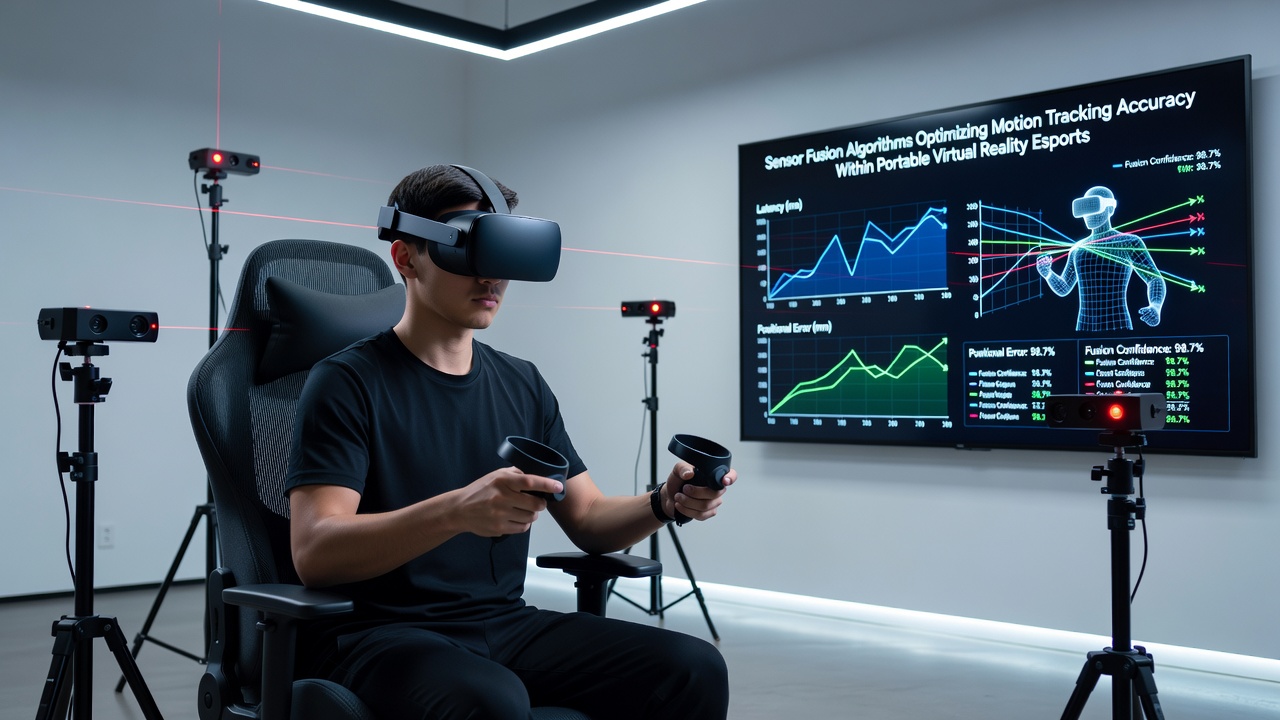
Those who have tested these systems report that fusion latency stays below 10 milliseconds when optimized code paths avoid unnecessary data copying between sensor drivers and estimation modules. Evidence from Australian research groups suggests that incorporating visual-inertial odometry alongside traditional IMU fusion further cuts positional drift during long matches, especially when players execute quick turns or crouch movements that challenge gyroscope-only tracking.
Deployment in Esports Tournaments
Event organizers integrate portable VR stations into arena floors where competitors move between matches without recalibrating entire rigs, and fusion algorithms handle on-the-fly bias estimation to keep tracking consistent. Figures from industry reports reveal that tournaments using fused sensor data experience fewer mid-match interruptions caused by tracking loss compared with setups relying on single-modality tracking. Teams often preload venue-specific magnetic maps into devices so that fusion routines can discount local interference sources during play.
Software updates distributed before major events in 2026 incorporate refined covariance matrices that adapt to individual player movement signatures, which improves consistency across different competitors using the same hardware pool. Link text such as CSIRO studies on inertial tracking and European Commission VR research summaries document performance benchmarks collected under tournament-like conditions.
Limitations and Ongoing Refinements
Power draw from continuous camera operation remains a bottleneck in extended sessions, prompting developers to duty-cycle optical sensors while relying more heavily on IMU data during periods of predictable motion. Heat generated by processors running fusion loops can affect sensor calibration inside compact headsets, so thermal throttling strategies now form part of standard firmware releases. Observers note that calibration routines executed between rounds help restore baseline accuracy without adding noticeable downtime.
Future iterations expected after September 2026 aim to embed more context-aware weighting that considers player posture and environmental lighting to further tighten error bounds. Data from multiple test sites continues to guide these incremental improvements.
Conclusion
Sensor fusion algorithms have become foundational to reliable motion tracking inside portable VR esports hardware, delivering the accuracy required for fair competition across temporary installations. Continued refinement of filter techniques and sensor integration methods supports broader adoption as events scale in size and geographic reach. Ongoing measurements from field deployments provide the quantitative basis for each successive improvement cycle.